GCB Sellers Get More Realistic—Now Buyers Must Read the Land
Reported late-2026 interest puts the focus on what asking prices miss: usable land, rebuilding limits and whether subdivision is actually possible.
Published 2026-10-17 · 6 min read
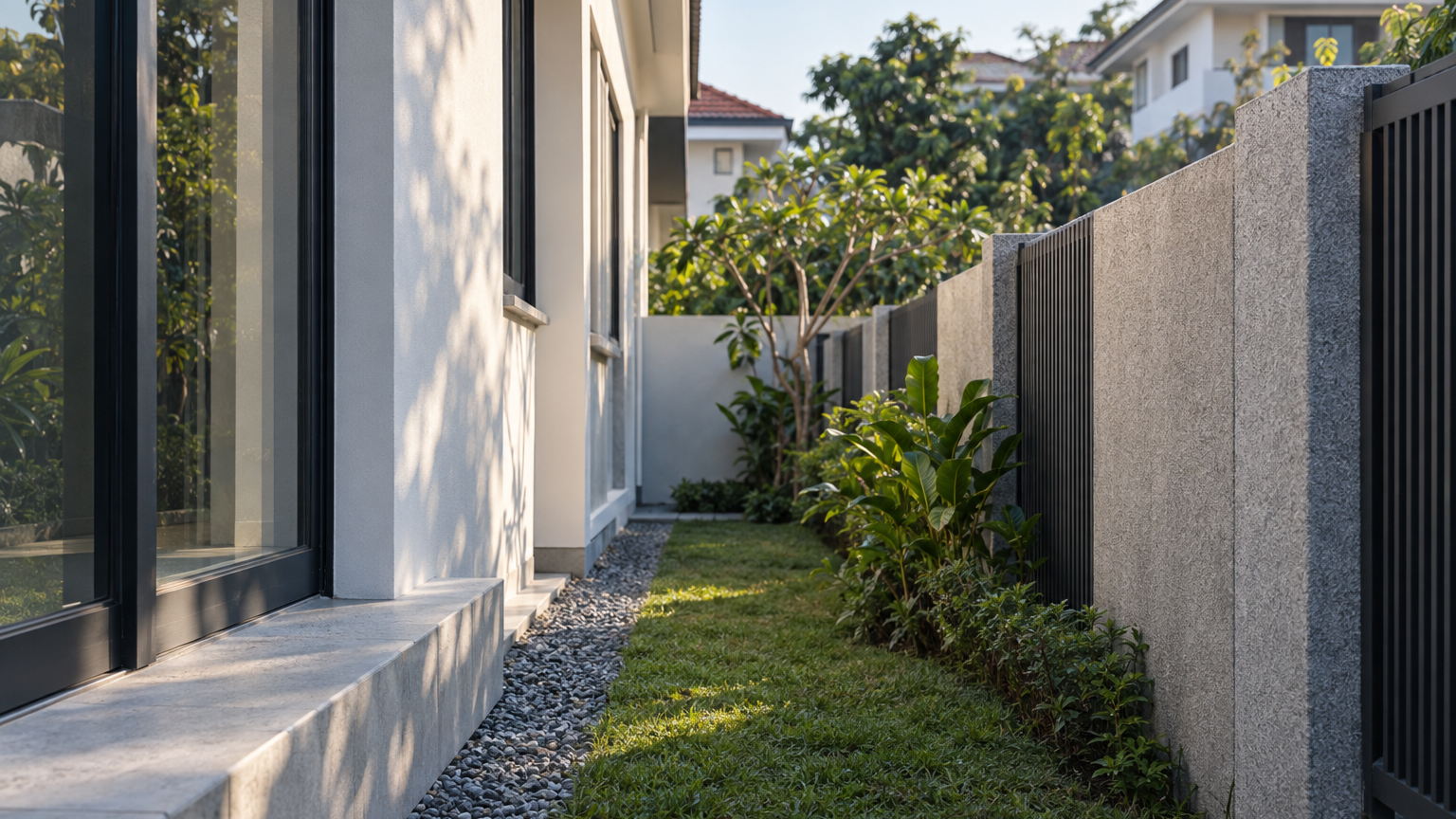
An October 16, 2026 market report says activity in Singapore’s Good Class Bungalow Areas could gather pace in the final months of the year as sellers move closer to what buyers consider fair value. Steve Tay, executive director of property consultancy Steve Tay Real Estate, said buyers had time to compare suitable homes and were more likely to act on reasonably priced ones.
For buyers, that extra breathing room matters. A cheaper old bungalow is not necessarily a bargain if its slope, shape, setbacks or conservation requirements restrict the replacement home—or make rebuilding markedly harder.
The reported pickup needs perspective
The report described a quieter first eight months of 2026, followed by expectations of more activity towards year-end. It also cited transaction counts derived from caveats lodged with the Urban Redevelopment Authority (URA), but those figures have not been independently confirmed through a dated primary dataset available for this article.
That distinction matters in the rarefied GCB market. A caveat is a legal notice commonly lodged after a property deal, but caveat records may not capture every transaction immediately—or every deal at all. The reported improvement should therefore be read as informed market commentary, not an official declaration that the whole GCB market has turned.
What is clearer is the choice facing buyers when sellers become more flexible: compare not just the asking price or land rate, but what each site can realistically support.
A large plot does not guarantee a proportionately large house
Singapore has 39 designated Good Class Bungalow Areas, commonly called GCBAs. Only bungalow developments are allowed within them, and URA defines a bungalow as a detached landed house with its own land title.
The prevailing planning controls set a usual minimum GCB plot size of 1,400 sq m, equivalent to about 15,070 sq ft. They also specify a minimum plot width of 18.5m, minimum depth of 30m, maximum overall site coverage of 45%, a 7.5m front setback, and 3m side and rear setbacks.
These numbers show why two plots of similar area can offer very different rebuilding prospects. A long, awkwardly shaped site may lose useful space around its edges. A broad, regular plot may accommodate rooms, circulation and outdoor areas more efficiently while staying within the same planning controls.
Consider a simple illustration. Forty-five per cent of the minimum 1,400 sq m plot is 630 sq m, or roughly 6,781 sq ft. That is only a mathematical ceiling based on the site-coverage percentage—not an automatic approved footprint. Setbacks, the permissible building envelope, site conditions and other planning requirements can reduce what is practical.
Buyers comparing land rates should therefore ask for a site survey and preliminary architectural assessment. Paying less per square foot for land may not help if a significant portion is difficult to build on or the desired house cannot fit comfortably.
Slope can change both design and cost
URA requires new landed homes to remain within a permissible building envelope governed by height controls and setbacks. On a sloping site, that envelope is measured with reference to permitted platform levels rather than simply following the natural rise and fall of the land.
In everyday terms, a dramatic level change is not just a landscaping feature. It can influence where the house sits, how vehicles reach it and how different floors relate to the ground. Retaining structures, earthworks and drainage solutions may also become important parts of the design.
This is where an apparently “realistic” asking price needs closer reading. An older house sold mainly for land may require demolition, consultants, approvals and a lengthy construction project before it becomes the home the buyer wants. Another bungalow with a more usable site—or a house that already suits the family—may justify a higher overall price even if its land rate looks less attractive.
The useful comparison is therefore total cost and outcome, not land price alone. Buyers should compare the existing building’s condition, likely scope of works and plausible replacement-house layout on the same basis for every shortlisted property.
Subdivision is not a standard value-add
A very large GCB plot may prompt an obvious question: can it be split into two? The general rule is that a newly created GCB plot must satisfy the 1,400 sq m minimum, together with the applicable width and depth requirements.
There is a limited provision involving a conserved bungalow. URA says the original site must have a combined area of at least 2,800 sq m, while only one residual plot may be created below the normal minimum, and that residual plot must still be at least 1,000 sq m. The conserved bungalow must remain on the other plot, subject to the relevant requirements.
This is an exception, not a shortcut available to every oversized property. Road access, lot shape, conservation obligations and planning approval still matter. A buyer should not price in a hypothetical second plot until the exact property has been assessed against current URA rules.
Conservation can also alter the rebuilding calculation. Singapore’s conserved bungalows are protected for their architectural and historical value, with restoration and alteration governed by conservation requirements. A conserved home may offer character that cannot be recreated, but ownership comes with a different design brief from demolishing an ordinary older house and starting afresh.
What “fair value” should include
For an owner, more realistic pricing does not always mean accepting the lowest land-rate comparison. A well-maintained home on a regular site may deserve to be presented differently from a teardown with difficult levels, even when both sit within the same GCBA.
For a buyer, the most useful first comparison has four parts: the land’s dimensions and shape; its levels and physical constraints; the condition and usefulness of the existing house; and the planning envelope for any proposed replacement. These factors help explain why nearby GCBs with similar site areas can still command very different prices.
The late-2026 pickup remains an assessment by market participants rather than a confirmed market-wide shift. But if sellers and buyers are moving closer on price, the opportunity is not merely to negotiate harder. It is to use that time to work out what the plot truly allows—before treating a lower asking price as better value.