Lornie Road family estate relaunched at S$83m with two possible futures
The late Chng Gim Huat’s 51,700 sq ft freehold property could remain one family compound—or become a landed development, subject to approval.
Published 2026-10-14 · 5 min read
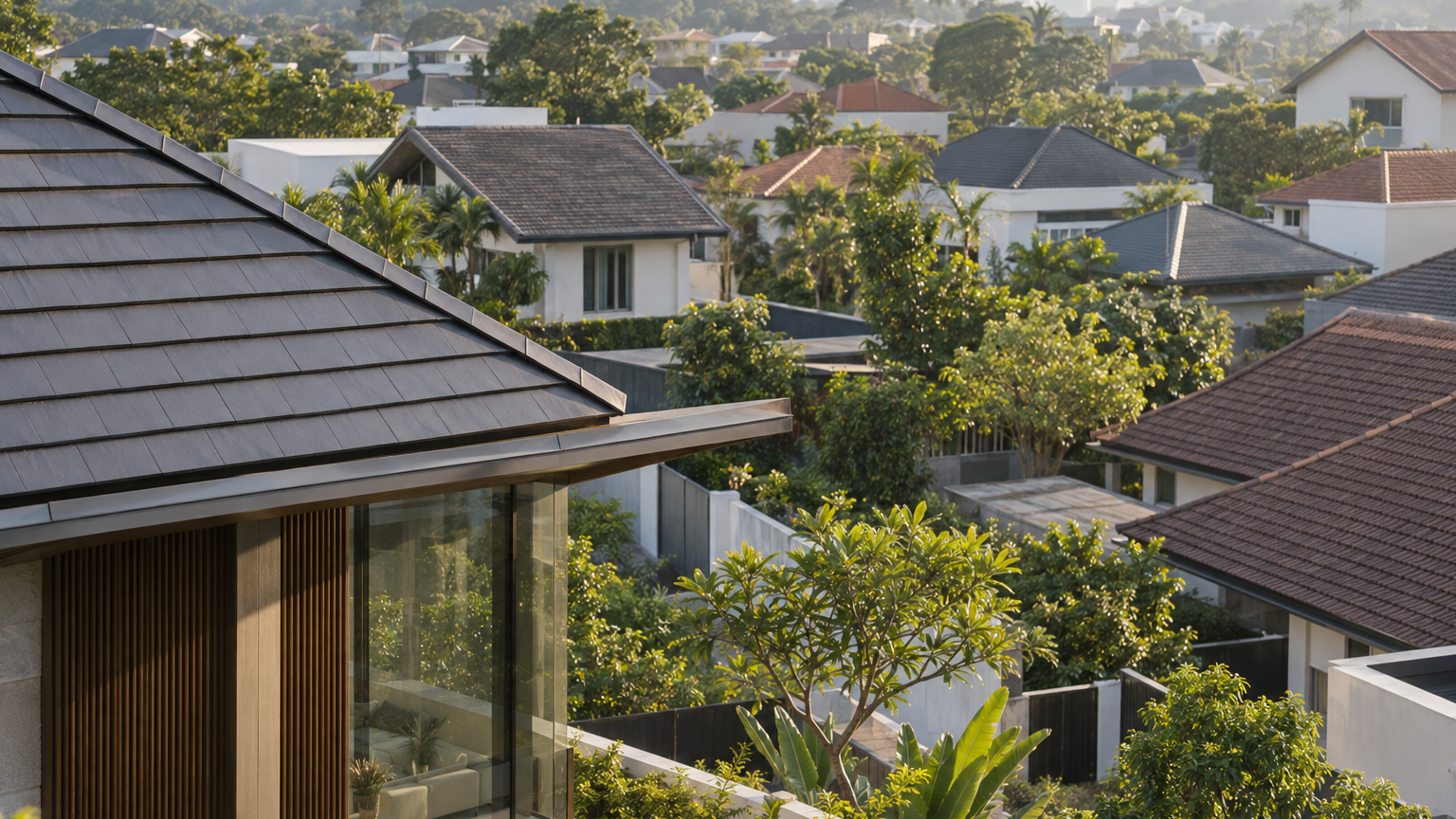
A 51,700 sq ft freehold estate at 8 Lornie Road has returned to the market with a S$83 million guide price. Launched by public tender on 13 October 2026, the property presents an unusual choice: preserve one enormous family compound or seek approval to remake the land into several homes.
That choice—not merely the eight-figure price—is what makes the sale interesting. The site is large enough to invite redevelopment ideas, but its freehold title and generous frontage do not automatically grant a buyer the right to divide it into a particular number of plots.
A family home returns at a higher guide
The two-storey bungalow belonged to the late property developer Chng Gim Huat. One of his five sons, Alex Chng, previously said that his father bought the home in the early 1970s and lived there until his death.
The estate was first marketed in May 2025 with an S$82 million guide price, then withdrawn. Its new S$83 million guide is S$1 million higher—a calculated increase of roughly 1.2%—but that comparison concerns two asking guides, not completed transactions.
At the stated land area, the latest guide works out to about S$1,605 per sq ft (psf) of land. The property is in District 11 and has approximately 58 metres of road frontage, according to its marketing agent, Knight Frank Singapore.
A public tender is an invitation for interested parties to submit offers by a deadline. It does not mean anyone has agreed to pay S$83 million, and the eventual bids may be above or below the guide. This tender closes at 3pm on Thursday, 12 November 2026.
One compound or several new houses?
Knight Frank says a purchaser could retain the estate as a multigenerational family home or explore detached houses, semi-detached houses or cluster housing. Every redevelopment route remains subject to approval from the relevant authorities.
For a family buyer, the attraction is straightforward: it is a very large freehold site that could keep several generations close while preserving more privacy and open space than a conventional landed plot. Rebuilding one house may also involve a less complicated planning proposition than carving the estate into a new development, although any proposal must still meet the applicable controls.
A developer faces a different calculation. The land cost is only the starting point; a workable scheme must account for roads and vehicle access, setbacks from boundaries, plot dimensions, building coverage and other site conditions. Space used to make the layout compliant is not necessarily space that can be sold as part of a house.
That is why simply dividing 51,700 sq ft by a standard minimum plot size would produce a misleading answer. It would ignore the shape of the land and the practical space needed for access, separation and planning compliance.
What Singapore’s landed rules actually allow
URA’s prevailing general controls set a minimum plot size of 400 sq m and a minimum plot width of 10 metres for a detached house. For a semi-detached house, the corresponding general minimums are 200 sq m and 8 metres.
Those figures are thresholds, not a ready-made subdivision formula for 8 Lornie Road. Landed developments must also satisfy requirements covering matters such as setbacks and site coverage, while applicable street block plans and site-specific conditions can impose further constraints.
URA provides a plan-lodgement route under which planning permission for a qualifying new landed house may be deemed granted after compliant plans are lodged by a qualified professional. This route does not remove the underlying planning rules, and it has exclusions, including properties in Good Class Bungalow Areas and Special Control Areas.
A serious buyer considering redevelopment would therefore need an architect or planner to study the site boundaries, levels, access and applicable controls before attaching value to any proposed housing yield. Until there is a site-specific approval, detached, semi-detached and cluster homes are possibilities rather than promised outcomes.
Why the freehold title still matters
Freehold ownership avoids the diminishing lease term that affects leasehold land, making the estate suitable for a family considering very long-term occupation. But tenure answers how long the land can be held; it does not decide how intensively that land can be rebuilt.
The relaunch therefore places two quite different ideas of value side by side. One buyer may value the rarity of keeping 51,700 sq ft intact as a private family estate. Another may value the opportunity to pursue a carefully planned landed development, while accepting the time, approval risk and construction work involved.
For now, S$83 million remains a guide rather than a result. The next useful evidence will come after the tender closes: whether bids emerge, whether the family accepts one and, if a sale follows, whether the new owner chooses to preserve the compound or begins the longer planning process to reshape it.