Serangoon Garden shophouse story held pending verified sale evidence
Official sources clarify the planning, ownership and tax rules, but none verifies the reported offering, rent or guide price.
Published 2026-10-06 · 4 min read
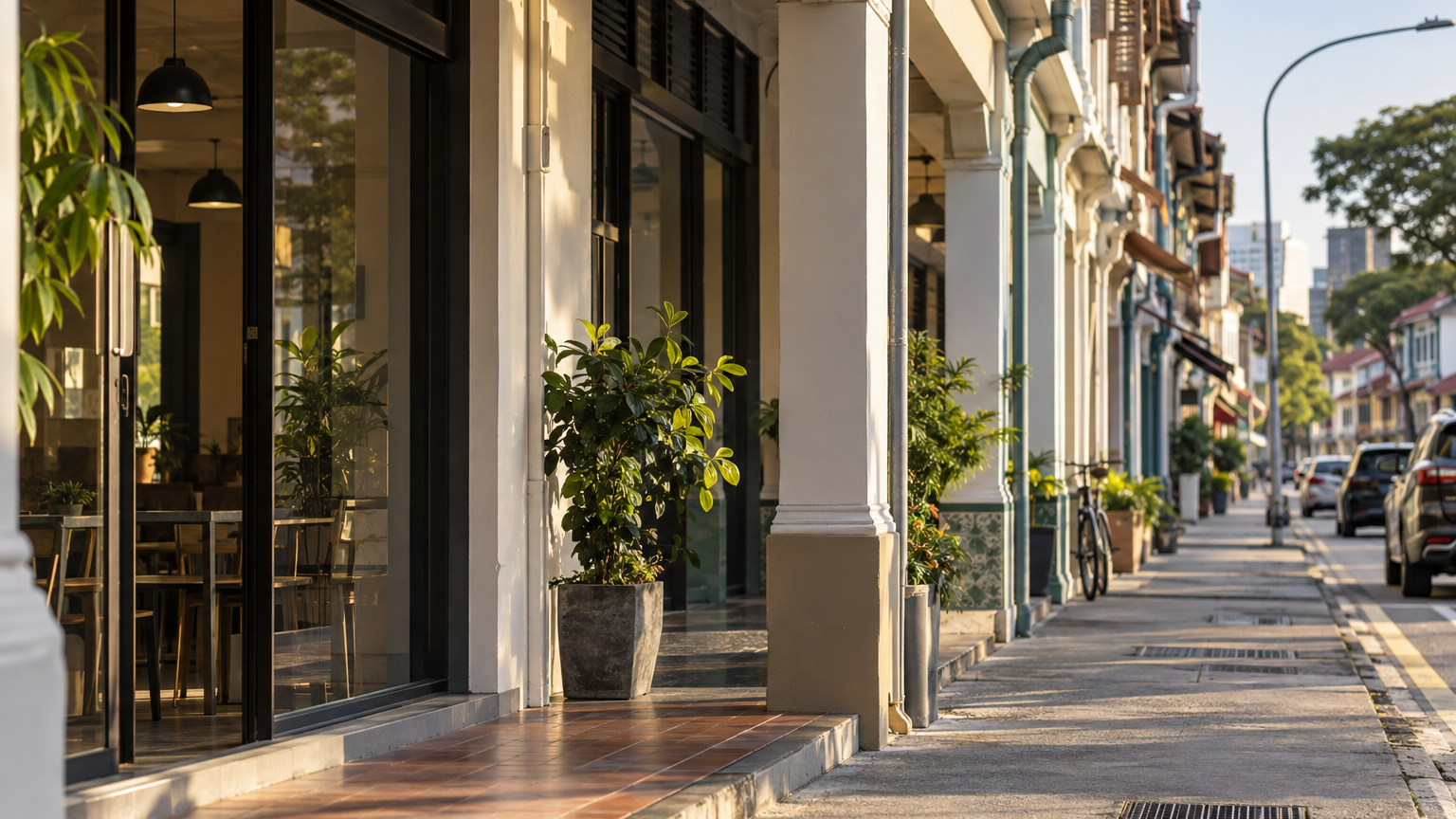
The Serangoon Garden shophouse story remains on hold because the approved evidence does not establish the sale offering at its centre. The supplied brief describes a future-dated expression-of-interest exercise, but none of the permitted sources is a listing, agency announcement or owner’s sale document.
That gap matters because the proposed $10.8 million guide price, $20,000 monthly rent and closing deadline would carry most of the story. Without an approved source for those details, readers cannot verify that the property is on the market, much less treat its asking price as evidence about commercial or landed-home values.
The yield calculation needs verified inputs
The proposed arithmetic is simple: monthly rent of $20,000 would equal $240,000 a year, and dividing that by $10.8 million would produce a gross yield of about 2.22%. But a correct calculation can still rest on unverified inputs.
A primary sale document should confirm the guide price, rent, current tenancies, tenure and expression-of-interest deadline. It should also make clear that the figure is a guide price rather than an accepted bid or completed sale.
Even after verification, 2.22% would be a gross yield, not the owner’s eventual return. Gross yield compares annual rent with the purchase price before property tax, vacancy, repairs, financing and other ownership costs. GST may also affect a non-residential sale or lease depending on the parties and transaction: IRAS says sales and leases of non-residential property are generally subject to GST, while residential property transactions are exempt.
An address is essential for rebuilding analysis
The supplied material does not provide an approved address or planning-lot reference. That prevents Landed Navigator from determining whether the unidentified property falls within a particular URA street-block plan.
URA has published controls for seven specified party-wall rows along Maju Avenue, Kensington Park Road and Serangoon Garden Way. The plan indicates commercial use at gross plot ratio 1.4, a two-storey maximum, party-wall form and a continuous covered walkway for those identified rows.
These are meaningful constraints. A party-wall shophouse shares side walls with neighbouring buildings, while gross plot ratio controls how much floor area may be built relative to the site. Together with the height and walkway requirements, they mean such a property cannot automatically be assessed like an open residential plot with flexible rebuilding possibilities.
But neighbourhood proximity is not enough to apply those rules to this offering. The exact lot must first be identified. A verified address would also allow the reported land and floor areas to be checked instead of borrowing measurements from another Serangoon Garden listing.
Commercial and residential rules are different
The property’s legal classification and approved use would shape who can buy it. Singapore Land Authority guidance says a foreign person may acquire a shophouse for commercial use without approval under the Residential Property Act, whereas approval is required for a shophouse used for non-commercial purposes.
That distinction cannot be inferred from appearance alone. A low-rise commercial shophouse within a landed neighbourhood may look closely connected to the surrounding estate, but it operates under different use, ownership and income considerations from a terrace, semi-detached house or bungalow.
Stamp duty also requires more care than a blanket claim that commercial property attracts “no stamp duty”. IRAS states that Buyer’s Stamp Duty applies when property is bought or acquired, including non-residential property. Its published non-residential rates reach 5% on the portion of value above $1.5 million.
Additional Buyer’s Stamp Duty is tied to acquisitions of residential property and depends on the buyer’s profile and circumstances. Establishing that distinction requires reliable evidence of the asset’s legal classification; a marketing description by itself is not enough.
What would make the story publishable
The newsroom needs an approved primary document from the appointed agency, owner or authorised seller. It should identify the property and confirm its tenure, approved use, guide price, tenancy details, rent and closing time.
The address or lot reference would then allow the relevant URA controls to be checked. The parties’ tax status and transaction structure would still matter because IRAS treats non-residential property differently from residential property for GST purposes.
Until those records are available, publishing the proposed figures would risk turning an unverified asking exercise into apparent market evidence. It could also encourage readers to compare a commercial asset with nearby landed homes even though their planning rules, buyer eligibility, duties and valuation drivers differ.
The responsible next step is therefore evidence collection, not a market conclusion. Once the primary sale material is secured, the useful question will be what buyers are being asked to pay for verified commercial frontage and rental income—and, eventually, whether anyone actually pays it.