What S$5.17m buys across District 19’s divided landed market
The latest 343-sale snapshot spans leasehold options, freehold terraces and costly semi-detached homes—where tenure, plot shape and rebuild rules matter.
Published 2026-10-07 · 6 min read
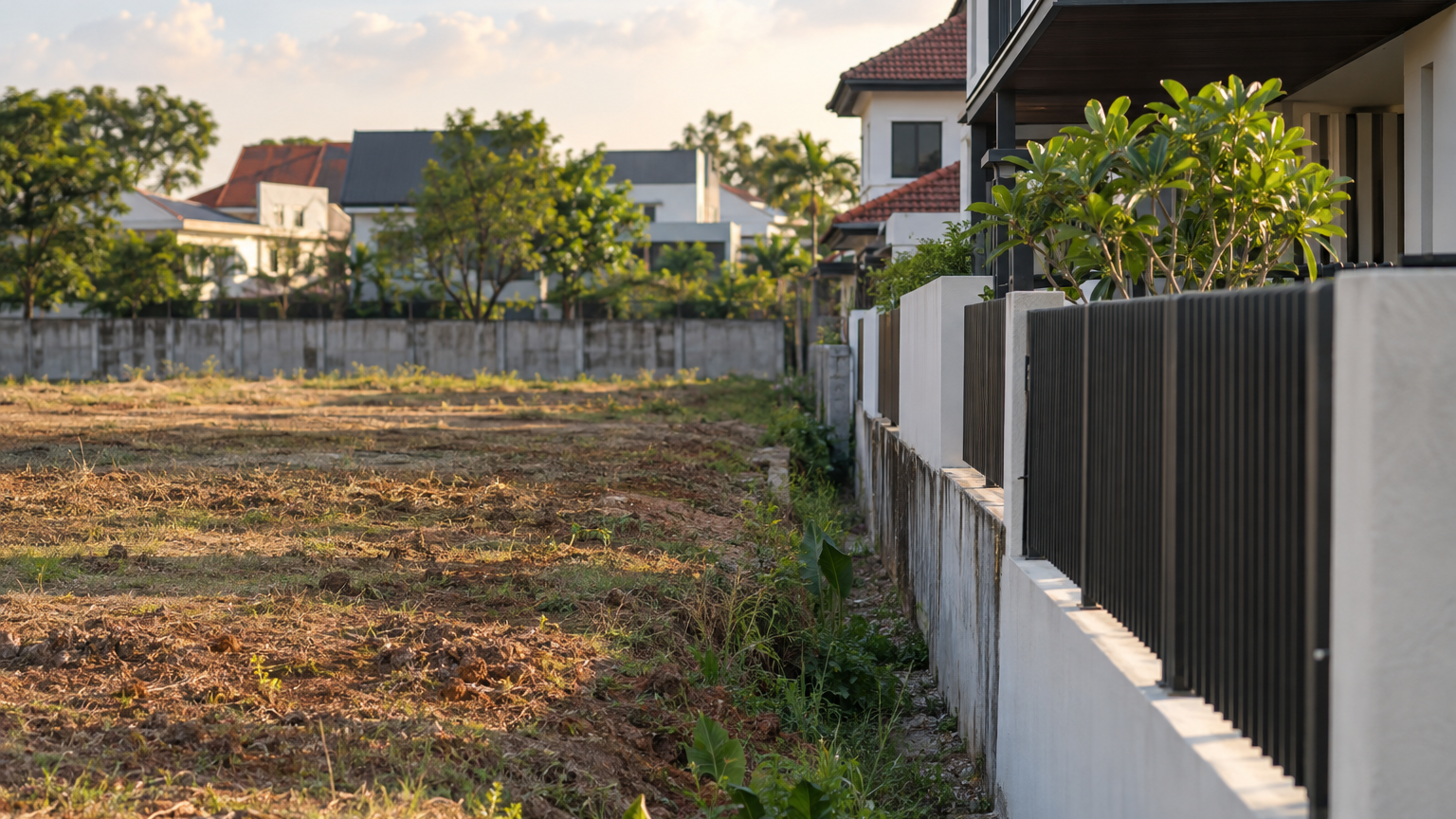
A District 19 landed buyer could have paid S$3.48 million for a Jalan Teck Kee terrace, S$5.2 million for a Kovan Road terrace or S$9.5 million for a new semi-detached house on Rosyth Road in July and August 2026. These are homes in the same postal district, but they represent quite different choices in location, tenure, house type, land and condition.
That spread explains why the district’s S$5.17 million rolling 12-month median needs unpacking. Based on 343 landed sales through August 2026, the figure is the middle sale in the selected dataset—not a description of the “typical” District 19 house.
One district, three broad markets
A practical way to read District 19 is as three overlapping markets. The boundaries are not perfect, but the grouping helps buyers compare homes that perform similar jobs instead of treating every terrace, semi-detached house and strata-landed unit as interchangeable.
| Broad segment | Examples in the available data | The real buying question |
|---|---|---|
| Lower-quantum leasehold or strata-style landed homes | 99-year Park Villas recorded a historical median of S$2.6 million, while 99-year Haus@Serangoon Garden recorded S$3.2 million | Is the lower entry price worth the remaining-lease and ownership trade-offs? |
| Established freehold terrace enclaves | Historical medians include S$3.9 million at Charlton Park, S$4.4 million at Golden Hill Estate and S$4.9 million at Tai Hwan Garden | How do the street, plot dimensions and existing house compare? |
| Larger, newer or wider-frontage homes | Recent records include the S$9.5 million new semi-detached Rosyth Road sale | How much of the price reflects more land, a different house type or completed construction? |
The named-estate figures come from different transaction histories and should not be blended mechanically with the rolling District 19 median. They are useful because they reveal the variation hidden inside one postal district, not because they provide an instant valuation for the next house on the street.
Even street-level figures can conceal large differences. The rolling dataset reports figures ranging from S$4.6 million for Jalan Pacheli and S$4.9 million for Kovan Road to S$7.8 million for Brighton Crescent, S$8.63 million for Phillips Avenue and S$9.5 million for Rosyth Road, using either medians or latest transactions as labelled.
Start with tenure and house type, not district psf
For landed property, price per square foot usually means the sale price divided by land area. It can be a useful first filter, but it does not tell you whether the buyer acquired a 99-year interest or freehold title, an intermediate terrace or semi-detached house, or a tired building rather than a newly completed one.
This is why two homes with similar land-area rates may still be poor comparables. A leasehold strata-landed development can come with shared-estate rules and facilities, while an individually titled freehold terrace presents a different bundle of rights, maintenance responsibilities and redevelopment choices.
The official transaction-search service lets users narrow caveats by postal district, property type, sale date and sale type. Before relying on an estate average, buyers can use those filters to find recent sales that more closely match the shortlisted home’s tenure and housing form.
Owners should make the same adjustment when assessing an offer. A high-priced new semi-detached transaction nearby may say little about an older intermediate terrace with less land, a narrower frontage and substantial work ahead.
A rebuildable plot is more than its land area
The house standing on a plot today may be only part of what a buyer is purchasing. Someone planning a major addition or complete rebuild must consider the plot’s shape, width, access, setbacks and planning designation—not merely the total square metres shown on the title.
Under the prevailing landed-housing controls, the baseline minimum plot size is 150 sq m for an intermediate Terrace-I house, 200 sq m for a semi-detached or corner Terrace-I house and 400 sq m for a detached house. The controls also cover matters such as minimum width, setbacks and site coverage, with the requirements varying by housing form.
Those baselines do not guarantee that a particular plot can be rebuilt into the owner’s preferred house. Site-specific controls, road conditions, plot geometry and other requirements still need to be checked with the Urban Redevelopment Authority and the relevant professionals before purchase or demolition.
This creates a useful comparison that a district median misses. A cheaper old house on a regular plot may suit a buyer willing to rebuild, while a more expensive completed home may suit someone who values certainty and wants to avoid several years of design, approvals and construction. Neither is automatically better; they are different uses of capital and time.
For sellers, rebuilding potential can be important—but it should be described precisely. A large land area alone does not justify advertising a plot as suitable for subdivision, reconstruction as another housing type or substantially greater floor area without the necessary planning checks.
The data does not identify the buyers
The transaction records show prices and property details, not household biographies. It would therefore be guesswork to claim that District 19 is being bought mainly by young families, upgraders, investors or any other particular group.
What can be established is the regulatory setting. Foreign persons generally need approval to purchase landed residential property in Singapore, including terrace, semi-detached and detached houses.
Additional Buyer’s Stamp Duty, or ABSD, also changes the sums involved for some purchasers. For acquisitions from 27 April 2023, a Singapore citizen buying a second residential property pays 20% ABSD, while a third or subsequent property attracts 30%; the foreign-buyer rate is 60%, subject to the applicable rules and concessions.
These rules help explain why a buyer’s citizenship and existing property holdings matter to affordability. They do not reveal who purchased the 343 District 19 homes or why any particular owner sold.
Future rail links are local, not district-wide
District 19 covers several neighbourhoods, so future transport benefits should be assessed address by address. Cross Island Line Phase 1 is expected to include Hougang and Serangoon North stations and to be completed in 2030, while the Punggol extension is targeted for 2032.
That is useful context for households comparing daily journeys, but it should not be used as a blanket explanation for past prices across the district. A home’s walking route to a future station—and the buyer’s actual commute—matters more than simply sharing the same postal district.
The clearest lesson from the S$5.17 million median is therefore not that District 19 has one prevailing landed-home price. It is that buyers and owners should first separate tenure, housing form, land geometry and building condition, then compare recent caveats from the same micro-market.
At this end of the market, moving from the wrong comparison to the right one can mean distinguishing a lower-priced leasehold home from an older freehold terrace—or recognising why a new semi-detached house costs millions more. The district median is a useful map marker, but the street and plot determine the journey.